
Sustainability in Cast Iron: Cooking With Forever Pans
When we talk about sustainability, most people think of solar panels or electric cars. But sometimes the simplest solutions are already in our hands—or in this case, over the fire.
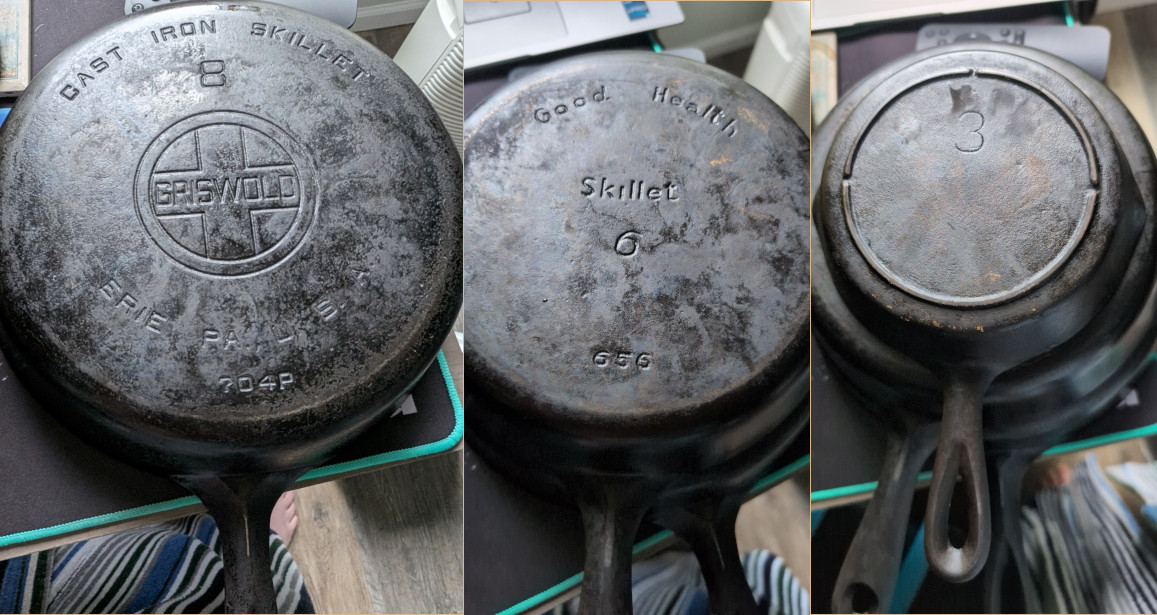
This week’s campfire spotlight is on cast iron. I’ve been cooking with three different skillets lately:
- A Griswold #8, made in Erie, Pennsylvania sometime between the 1920s and 1940s—the Cadillac of cast iron.
- A Good Health #6, a private-label pan cast by the same foundries nearly a century ago.
- And a humble #3 skillet I picked up at a garage sale for two bucks—rusty, unloved, but waiting for a second chance.
All three are at least 80 years old. And all three are still frying, searing, and baking like they were brand new.
Think about that:
- No landfill.
- No “planned obsolescence.”
- No cheap non-stick coating that flakes off after five years.
Just iron, fire, and a little seasoning.
🌱 Built to Last
The real sustainability lesson here is simple: longevity beats disposability.
- Durability – These skillets have survived wars, recessions, cross-country moves, and more bacon grease than I care to admit.
- Repairable – Rust? Strip it and re-season. Burned-on food? Scrub it down. Cast iron forgives, and with each comeback, it cooks better than before.
- Generational – A skillet isn’t just cookware—it’s a hand-me-down, a story, a piece of family history that keeps on giving.
♻️ The $2 Skillet That Could
That little #3 is my favorite reminder of what cast iron is all about. I found it at a neighborhood garage sale, buried in a pile of odds and ends, coated in rust. Price tag? Two bucks.
Most people would’ve walked right past it. I saw potential.
With a little scrubbing, seasoning, and patience, that forgotten pan is now back in rotation. It’s the perfect size for frying a single egg, toasting spices, or melting butter by the fire. Every time I cook with it, I think about how close it came to ending up in the landfill—and how little effort it took to bring it back.
That’s the beauty of cast iron: it doesn’t wear out. It just waits for someone to care enough to restore it.
🔥 Campfire-Ready Cooking
Over coals, on the smoker, or in a kitchen oven, cast iron keeps its promise: even heat, incredible sear, and a natural non-stick surface that improves with use. Every meal adds another layer of seasoning, another layer of story.
Pro tip: spread your coals evenly and preheat your skillet slowly. A patient pan is a happy pan.
🥃 A Pour With History
To honor cookware older than most of us, I like to pair it with a pour that carries its own legacy. Old Forester 1920 Prohibition Style is a favorite—big, bold, and smoky, with charred oak and vanilla notes that echo a steak seared in cast iron. A bourbon and a skillet, both built to last.
🚐 Around the Fire
Sustainability isn’t always about something new. Sometimes, it’s about respecting what already works. My Griswold, Good Health, and $2 garage-sale rescue are proof: 80 years, countless meals, and still going strong.
And the best part? With the right care, these pans will still be cooking long after I’m gone. That’s sustainability you can taste.
👉 Campfire Question for You: Do you travel with cast iron, or do you leave it at home? Drop your favorite cast iron story in the comments—I’d love to hear it.
Need help planning your next trip? Check out our September Campfire Corner to see how AI can help you.
Check out our August Campfire Corner for another crowd-pleasing jerky recipe to enjoy by the fire.